Pointe-Noire administrative meeting on decentralization
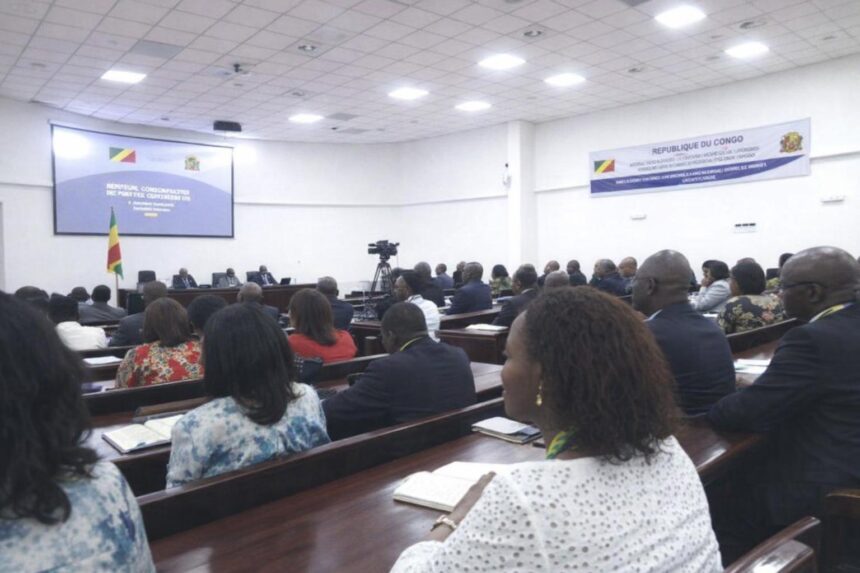
Pointe-Noire hosted an administrative back-to-work meeting on January 15, bringing together agents and senior staff from the department’s local administration. The aim was to strengthen management skills around the fundamentals of territorial governance, according to the Congolese Information Agency (ACI).
- Pointe-Noire administrative meeting on decentralization
- Why the prefect called the session
- Key lessons: deconcentration, decentralization and oversight
- Experts from the administration of the territory
- City hall reaction in Pointe-Noire
- Texts and Law 2003-20 as a reference point
- A promise of follow-up and next administrative days
The session was organized under the authority of Prefect Pierre Cébert Ibocko-Onangha. It was presented as a practical moment for aligning methods and language across services that deal daily with public administration and local development in Pointe-Noire (ACI).
Why the prefect called the session
Prefect Pierre Cébert Ibocko-Onangha said he initiated the discussions after noting operational shortcomings since taking office. The issues highlighted included difficulties in mastering how deconcentrated state administration connects with decentralized local governance (ACI).
In the same message, he pointed to an insufficient awareness of what deconcentration and decentralization each contribute, and how they should complement one another. The meeting was framed as a reset designed to restore shared standards and clearer working habits (ACI).
Key lessons: deconcentration, decentralization and oversight
Participants included local authorities, departmental and interdepartmental directors, and heads of services. They received guidance built around three main themes aimed at clarifying roles, responsibilities, and coordination across institutions in the department (ACI).

The first theme focused on the articulation between deconcentrated administration and decentralized administration. In practical terms, it addressed how state services operating locally and elected local authorities are expected to work side by side without duplication or confusion (ACI).
The second theme examined the contribution of deconcentrated state services to local development. This segment emphasized how technical services can support territorial projects and public action at the local level, within the framework set by public administration (ACI).
A third theme addressed the prefect’s powers regarding administrative acts taken by local authorities, as well as relations with heads of deconcentrated state services. The goal was to make procedures more predictable and better understood by all stakeholders (ACI).

Experts from the administration of the territory
ACI reported that the themes were delivered by experts from the administration of the territory, including Prefect Jacques Essissongo, identified as an inspector general of the administration of the territory. The session therefore combined local leadership with technical expertise (ACI).
The approach sought to move beyond general principles and toward an operational understanding of governance. For many participants, this type of exchange can help reduce friction between services and encourage a more unified public response to citizens’ needs (ACI).
City hall reaction in Pointe-Noire
During the meeting, Pointe-Noire’s first deputy mayor, Louis Gabriel Missatou, publicly congratulated Prefect Ibocko-Onangha for the initiative. He described it as a first for the department during his two mandates in that municipal role (ACI).
The intervention suggested a shared interest in reinforcing coordination between prefectural authority and the city’s executive team. It also underscored an expectation that training and clarification can translate into more consistent administrative practice on the ground (ACI).
Texts and Law 2003-20 as a reference point
In his closing remarks, Prefect Ibocko-Onangha insisted that territorial governance is regulated by legal texts. He referred in particular to Law 2003-20 of February 6, 2003, presented as a central reference for organizing territorial action and responsibilities (ACI).
He said the administrative meeting was built on a diagnosis made internally, and that Pointe-Noire needed the right “levers” to work effectively. His message emphasized discipline in procedures and the importance of acting within the established framework (ACI).

A promise of follow-up and next administrative days
The prefect also announced that a second meeting would be held to address the identified dysfunctions “with delicacy,” according to ACI. The wording suggested a desire to correct practices while maintaining cohesion among services and institutions (ACI).
Finally, ACI noted that this administrative back-to-work meeting comes ahead of administrative days scheduled to be held soon. The sequence points to a broader calendar of internal coordination and professional exchanges within the department (ACI).
For residents and users of public services, the main takeaway is the stated intention to improve how administrations work together, so rules are applied more uniformly. In a city as active as Pointe-Noire, smoother coordination can be felt in day-to-day interactions with offices (ACI).