Viral photo ignites Brazzaville debate
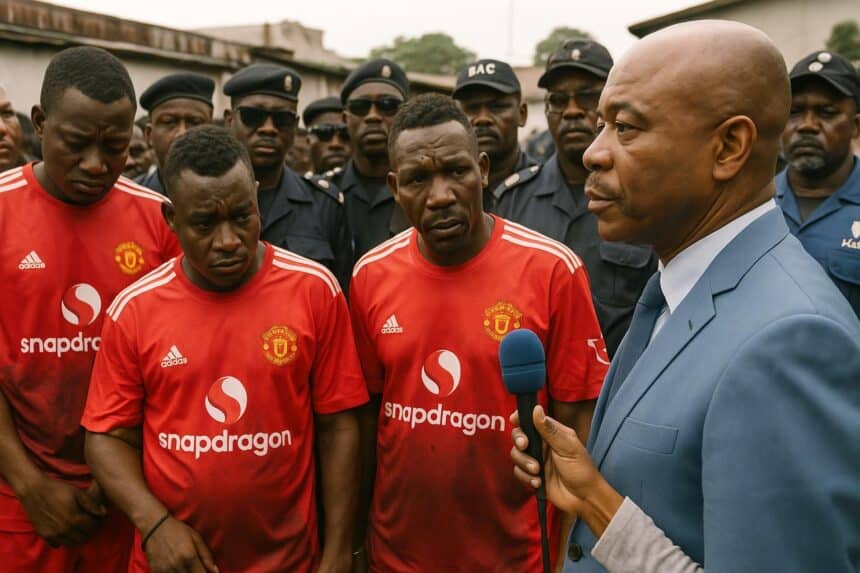
The snapshot of seven men in bold red Manchester United shirts, hands cuffed yet eyes steady, has raced through phones in Brazzaville since the weekend, feeding radio talk-shows and corner-shop discussions. Locals recognise the accused as the alleged killers of businessman Alain Obambi. It feels orchestrated, say bystanders.
- Viral photo ignites Brazzaville debate
- The day the suspects faced cameras
- Police clarify the unexpected wardrobe
- Manchester United and image rights question
- Legal path ahead for the seven men
- Citizen voices resonate on social networks
- Football jerseys as urban identity markers
- What investigators still need to establish
Beyond the shock of seeing murder suspects in a Premier League kit lies a marketing puzzle: why select an English club over local sides whose colours flood the city on match days? From Poto-Poto to Bacongo, commuters traded theories as memes multiplied.
The day the suspects faced cameras
On Friday morning, officers from the urban security directorate escorted the seven from holding cells to the prosecutor’s office. To many journalists, the moment looked routine until the red jerseys appeared under regulation blue vests, creating an instantly recognisable tableau in front of flashing lenses.
Officials later confirmed the suspects were asked to change out of civilian clothes for “identification consistency”. Standard khaki overalls were reportedly unavailable after a large seizure the previous day, leading a quartermaster to reach for the only clean matching tops in storage: donated Manchester United replicas.
Police clarify the unexpected wardrobe
Commander Arnaud Ossandji told state radio that the force had “no intention to promote any club or offend supporters”. He described the choice as an operational mishap rather than symbolism, stressing that custody procedures were respected and that the men remain presumed innocent under Congolese law.
A spokesperson for the Ministry of Sports, contacted by our newsroom, welcomed the police clarification and invited local teams to donate neutral kits for future needs. “The episode should remind clubs of their social responsibility,” she added, while applauding the swift collaboration between security services and justice officials.
Manchester United and image rights question
In distant Manchester, club representatives have not publicly commented, yet marketing experts in Africa note that viral criminal imagery can blur brand perception. Advertising consultant Léon Kimbembe points out that the shirts are counterfeit, shielding the English giants from legal exposure but not from awkward associations online.
He recalls a 2019 case where a Brazilian gang wore Juventus tops during an arrest, which briefly unsettled sponsors. “Social media treats pictures as truth; context gets lost,” Kimbembe warns, urging clubs to engage communities to avoid misinterpretation. For now, searches for “Man Utd Congo” trend on TikTok just overnight.

Legal path ahead for the seven men
The prosecutor’s office has opened a file for aggravated murder, carrying potential life sentences. Investigators are cross-checking mobile data, witness statements and ballistics. Magistrate Mireille Bongo says the photo frenzy “will not interfere with due process”, reminding families that evidence, not outfits, decides the fate of the accused.
The court has 30 days to confirm preventive detention, renewable if inquiries justify. Defence lawyer Julien Mabiala requested medical examinations to verify claims of minor injuries during arrest. Human-rights groups observe proceedings but praise authorities for granting the suspects access to counsel within the mandatory timeframe.
Citizen voices resonate on social networks
Across WhatsApp groups, some users see humour in the uniform saga, editing the suspects into mock Premier League line-ups. Others call for restraint, citing the Obambi family’s grief. Blogger Prisca Ntumba notes that the conversation, albeit chaotic, “shows a growing appetite for accountability and transparency in justice matters”.
Street vendors selling counterfeit jerseys report a small spike in United sales, driven by curious buyers wanting a piece of the “case”. Yet vendors also hear shoppers joke that they risk being mistaken for criminals these days. The paradox underscores how quickly digital narratives shape real-world behaviour in Brazzaville.
Football jerseys as urban identity markers
Congolese cities live and breathe football symbolism; a shirt signals neighbourhood alliances as much as club loyalty. Sociologist Rodrigue Mavoungou explains that imported teams offer a shared language beyond local rivalries, which may explain the immediate recognition of the suspects’ attire and the emotional charge that followed.
He adds that had the seven worn the green of AC Léopards or the orange of JS Talangaï, reactions might have split along fan lines rather than unite the city in collective curiosity. “Global brands create neutral ground; sometimes that neutrality backfires,” Mavoungou observes with a shrug.
What investigators still need to establish
The homicide of Alain Obambi, a respected logistics entrepreneur, remains under investigation. Police are tracing financial transactions and reviewing CCTV from Talangaï district where the attack occurred. Sources within the brigade say ballistic reports are pending, and they expect to submit a preliminary brief to the prosecutor next week.
Meanwhile, the red-shirt image serves as a cautionary tale on the power of visuals in the digital era. As the legal clock ticks, Brazzaville waits for answers, hoping the next picture it shares online will be a conviction grounded in facts, not outfits for families across the capital.
Officials promise daily briefings, aiming to keep rumours from clouding the investigation.