Festive farewell in Brazzaville
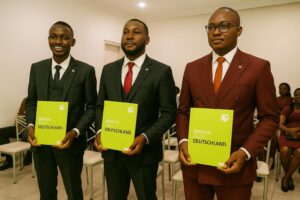
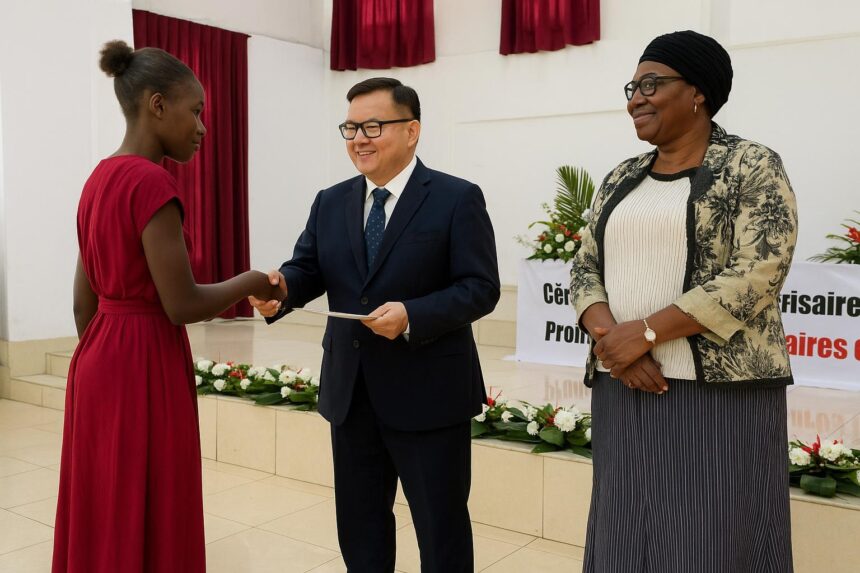
Cheerful songs echoed through the amphitheatre of the Ministry of Higher Education in Brazzaville on 9 December, as 250 young Congolese, suitcases still empty but dreams already packed, received their official letters to study in Russia under a fully funded federal scholarship.
The send-off ceremony, co-chaired by Minister Delphine Edith Emmanuel and Ambassador Ilias Iskandarov, mixed family hugs, patriotic rhetoric and practical advice, projecting the image of a nation investing confidently in its future human capital.
Inside the Russia-Congo scholarship programme
For the third consecutive year, Russia has allocated a quota of 250 places to Congo-Brazzaville, covering tuition, housing and a monthly stipend across disciplines deemed strategic such as chemistry, mining engineering, medicine, agriculture and management (Embassy of Russia in Congo press release, 9 Dec 2023).
While the figure may appear modest against the thousands who finish secondary school each year, officials stress that the programme’s ripple effect lies in the expertise graduates bring back to local laboratories, farms, clinics and companies.
Education ties between Moscow and Brazzaville date back to the 1960s, when the People’s Friendship University welcomed the first Congolese scholars; today, the alumni network counts ministers, surgeons and engineers who regularly mentor new intakes (Ministry of Higher Education, Brazzaville, 2023).

Under the current agreement, scholars receive health insurance, discounted transport passes and dormitory rooms, though meals and personal expenses remain partially at their charge, an aspect the minister encouraged families to plan for early.
The selection process began in May with academic transcripts, language aptitude and motivational essays, later followed by medical screenings; out of more than 1,600 applicants, 250 succeeded, reflecting a competitive rate comparable to national entrance exams for specialised institutes.
Economic analysts view the scholarships as cost-effective compared to sending students to Western Europe, noting lower tuition and living costs in Russia while still granting access to high-grade laboratories and internationally recognised degrees (African Higher Education Observatory, 2023).

Speeches that inspired the cohort
Minister Emmanuel reminded parents that public funding comes with responsibility, urging students to maintain exemplary behaviour and to ‘return equipped for national development, not just personal glory’, a phrase that drew loud applause.
Ambassador Iskandarov, speaking alternately in French and a carefully pronounced Lingala greeting, emphasised cultural immersion as strongly as academic excellence, noting that many Congolese now master Russian faster thanks to preparatory language courses run at the Russian Centre for Science and Culture in Brazzaville.
He also painted vivid travel postcards: snow-covered pine forests, the midnight sun over St Petersburg and the bustle of Kazan’s technological hub, insisting that such experiences build empathy and broaden perspectives essential for diplomacy and trade.
Faces of the 2023 cohort
Twenty-seven percent of the cohort are women, a slight increase from last year, with many choosing biomedical sciences and agronomy, fields highlighted in Congo’s National Development Plan 2022-2026.
First-year destinations include Tomsk, Novosibirsk, Rostov-on-Don and Moscow, ensuring geographical spread and exposure to varied climatic zones; mentoring committees composed of Congolese alumni in each city have already organised welcome weekends.
Aline Mboumba, 19, future agronomist, said she practised Cyrillic every night after class and dreams of introducing drought-resistant wheat on family land near Dolisie; her father nodded approvingly, calling the scholarship ‘a seed that will germinate for generations’.
Jean-Luc Massamba, computer-science candidate, reflected on the importance of cybersecurity skills for Congo’s emerging digital economy and hopes to undertake an internship at Skolkovo Innovation Center before returning to serve in a public agency.
Support systems and future outlook
Behind the scenes, civil servants from both countries coordinate visa arrangements and pre-departure health insurance, an administrative ballet that often goes unnoticed yet proves crucial for a smooth arrival, especially this year as global travel rules fluctuate.
The Russian embassy has scheduled an online orientation where current students will answer practical questions on winter clothing, halal food options and internet packages, topics that consistently surface in alumni surveys.
Brazzaville’s higher-education observers point out that international scholarships complement, rather than replace, domestic universities; several returnees now lecture at Marien-Ngouabi University, spreading acquired know-how and pushing for curriculum updates.
Looking ahead, both governments are negotiating double-degree frameworks that could allow credits earned in Russia to be co-validated in Congo, a move expected to ease professional recognition and attract even more applicants in coming years.
For now, the departing cohort focuses on immediate tasks: packing thick coats, downloading Russian grammar apps and saying heartfelt goodbyes—small rituals that mark the start of a journey poised to intertwine personal growth with Congo’s broader economic ambitions.
As cameras flashed for the final group photo, the minister raised a small Congolese flag, reminding everyone that the study journey, however long, remains a mission in the service of the republic, a sentiment many families echoed on their way out of the hall.