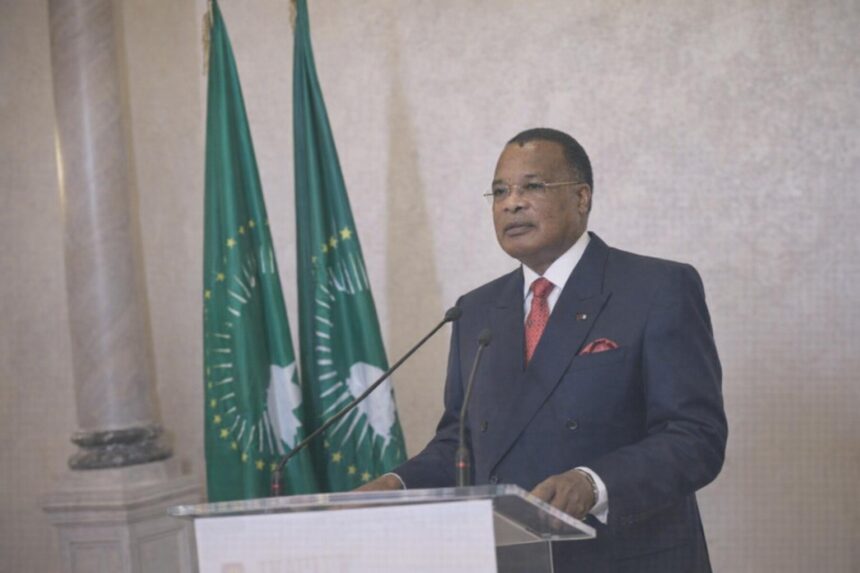
New Year wishes to Congo’s institutions
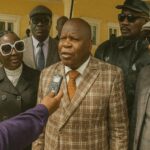
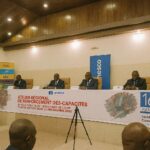
In a traditional New Year ceremony, President Denis Sassou Nguesso received and returned greetings to Congo-Brazzaville’s “national institutions” and other organized bodies. The address was framed as a yearly moment of courtesy, reflection, and guidance for public life (Journal de Brazza).
- New Year wishes to Congo’s institutions
- A message aimed at calm and confidence in 2026
- March 2026 presidential election: a call for peace
- “Forces vives” and shared responsibility
- Faith references: peace, kindness, and civic spirit
- Politics, NGOs, and associations urged to reinforce cohesion
- Unity, dialogue, and the national motto in focus
He thanked those present for their wishes addressed to him and to his wife, family, and close relations. The President, in return, offered wishes of peace, longevity and happiness to officials, their families, and the institutions and organizations they represent (Journal de Brazza).
A message aimed at calm and confidence in 2026
The President’s words focused on what he described as the responsibilities of each institution and “force vive” of the nation. He expressed the hope that 2026 would strengthen faith, commitment and effectiveness in carrying out assigned missions (Journal de Brazza).
In a reflective passage, he said 2025 had entered the past, and that the past helps the present to be thought through. He presented 2025 as a nearby “beacon” shedding light on a major upcoming event: the March 2026 presidential election (Journal de Brazza).
March 2026 presidential election: a call for peace
Looking ahead to the presidential vote scheduled for March 2026, Denis Sassou Nguesso described the moment as sensitive and decisive for democracy. He called for it to be approached and lived in peace and harmony, invoking an old saying: “Where harmony lives, success lives” (Journal de Brazza).
He linked this harmony to respect for diversity, which he presented as both the foundation of national vitality and a source of shared richness. The common good, he said, is the Congo itself—“our country,” held in common by all citizens (Journal de Brazza).
“Forces vives” and shared responsibility
The President underlined that the country’s “forces vives” form the national community, and that every component, by playing its part, contributes to consolidating peace and living together. The message placed social cohesion at the center of everyday citizenship (Journal de Brazza).
He emphasized that religion also has a place in this “multipolar space,” despite the secular character of the state. In his view, religious communities can encourage the public to work for peace and help protect national unity (Journal de Brazza).
Faith references: peace, kindness, and civic spirit
In his address, Denis Sassou Nguesso referred to Christianity and Islam as the two most practiced religions in the country. He said both elevate love of one’s neighbor and preach peace, quoting Jesus: “I leave you peace, I give you my peace” (Journal de Brazza).
He also cited a sentence attributed to the Prophet Muhammad to illustrate the value of kindness: “Kindness is an act of faith, and the one who has no kindness has no faith.” The references supported his appeal for calm, mutual respect and social solidarity (Journal de Brazza).
Politics, NGOs, and associations urged to reinforce cohesion
The President noted that political parties, associations and non-governmental organizations also promote peace, civic behavior, love and respect for others in their founding principles. From that perspective, he argued that reinforcing social cohesion remains a continuous task (Journal de Brazza).
He pointed to coexistence built on mutual respect and tolerance as a practical way to consolidate living together and build a supportive society. He highlighted dialogue and listening, shared values for the community’s benefit, and civil behavior that avoids harming social life (Journal de Brazza).
Unity, dialogue, and the national motto in focus
The speech returned repeatedly to the idea that collective norms and shared symbols help regulate life in society. For the President, these common references ultimately structure “living together” and remind everyone of their role, from institutions to ordinary citizens (Journal de Brazza).
He renewed an appeal to the national community to prioritize unity and cohesion through constructive dialogue, with the goal of a nation engaged on the path of peace and progress. The tone was both firm and reconciliatory (Journal de Brazza).
To close, Denis Sassou Nguesso invited political actors, administrative leaders, religious authorities, traditional chiefs, women and young people to promote the values of the national motto: Unity, Work, Progress. He ended by wishing everyone a happy and successful year 2026 (Journal de Brazza).