Senate’s pivotal vote
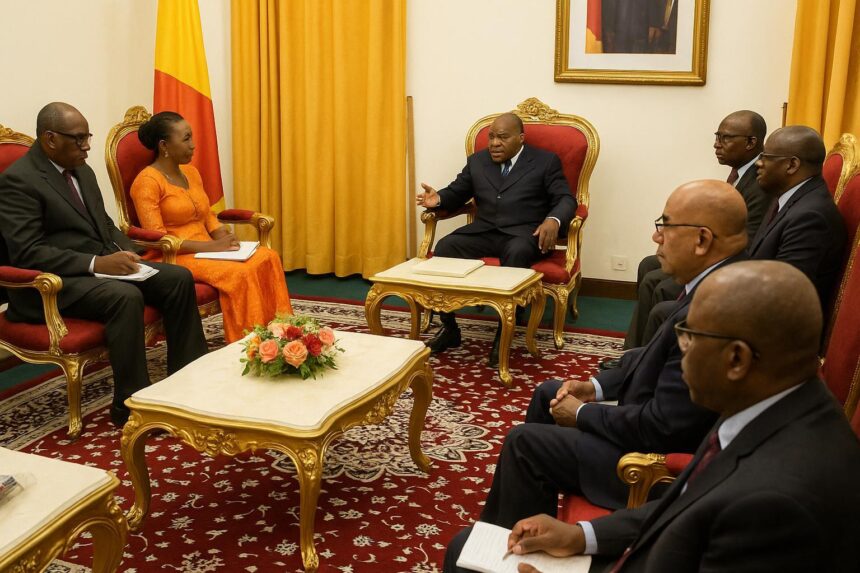
Outside the marbled chamber of Brazzaville’s Senate, UNFPA country representative Dr Agnès Kayitanhore spoke with calm urgency. Her visit, on 17 December, carried a single message: reproductive health cannot wait, and the upper house holds the key to turning pledges into binding law.
She outlined how senators, by adjusting budget lines and passing targeted regulations, can widen access to contraception, upgrade maternal wards and fund safe-house networks for survivors of gender-based violence. “No woman should lose her life while giving life,” she reminded Senate president Pierre Ngolo.
Ngolo, himself a longtime advocate of family welfare programmes, listened attentively and signalled the chamber’s readiness to “study every proposal in depth.” Though no vote is scheduled yet, insiders say committees could begin examining draft amendments to the Public Health Law early next session.
Why reproductive health funding matters
Congolese facilities conduct impressive work with limited means. The country still records an estimated 378 maternal deaths per 100 000 live births, according to the latest UNFPA dashboard, largely because remote clinics lack skilled staff, emergency transport or essential commodities such as oxytocin and blood bags.
Investment in modern contraception is equally decisive. UNFPA figures suggest that meeting current unmet need could prevent 70 000 unintended pregnancies a year, easing pressure on households already navigating rising food and transport costs. For young couples in Brazzaville’s outskirts, a planned pregnancy often spells economic stability.

Dr Kayitanhore frames these numbers not as bleak statistics but as opportunities. “Every birth attended by a skilled midwife strengthens a family, every girl protected from violence strengthens a community,” she told reporters, stressing that reproductive health is both a rights issue and a cornerstone of macro-economic growth.
Four strategic priorities explained
The UN agency’s roadmap for Congo rests on four pillars. First, slashing preventable maternal mortality through better referral systems and 24-hour blood banks. Second, ensuring that every man and woman who wants contraception can get it without stock-outs or stigma at public pharmacies.
Third comes the elimination of gender-based violence, combining prevention campaigns in schools with survivor-centred services at hospital level. Finally, the agency highlights data: collecting reliable demographic information so lawmakers can fine-tune programmes instead of relying on approximations from outdated censuses.

“Data may sound abstract, yet it shows us where a teenage mother drops out of school or a rural midwife needs training,” the representative explained. Recent mobile-phone surveys piloted in Pool Department already hint at pockets of early marriage that previous household studies missed.
Senators present during the briefing noted that real-time dashboards could help them track how credits voted in Brazzaville translate into incubators or retraining workshops on the ground, a level of visibility usually reserved for finance bills. “Evidence reassures taxpayers,” one committee chair said off-record.
Financial levers under scrutiny
For 2024, the Ministry of Health has earmarked 26 billion CFA francs for maternal services. UNFPA covers an additional 6 billion in commodities and technical support. Advocates, however, argue that a dedicated budget line for family planning would protect contraceptives from wider procurement delays.
Kayitanhore hinted that blended finance could fill gaps. Under one scenario, a low-interest facility managed by the Development Bank of Central Africa would frontload upgrades to rural maternity blocks, while oil-sector royalties would reimburse the loan over five years. Negotiations, she said, are still exploratory.
Within the Senate, budget rapporteurs appear receptive. They recall how similar mechanisms accelerated the rehabilitation of district hospitals after the 2020 floods. “Results speak louder than models,” observed Senator Aurélie Mbemba, stressing that every intervention should complement the government’s National Development Plan rather than duplicate it.
Looking ahead to 2026
UNFPA’s current cooperation framework with Congo runs until 2026, aligning with Agenda 2063 and the nation’s own Vision 2030. Over the next three years, joint teams will update midwifery curricula, pilot community-driven referral apps and expand youth-friendly corners in at least 100 secondary schools nationwide.

Senators have asked the agency for quarterly scorecards so progress can be showcased during plenary debates and constituency tours. The move fits with broader government efforts to anchor public policy in measurable outcomes, a stance applauded by several civil society groups consulted after the meeting.
As the conversation shifts from advocacy to drafting, observers remain cautiously optimistic. The Senate’s involvement, once formalised, could secure long-term funding streams and legal safeguards that outlive electoral cycles. For mothers in Impfondo or Pointe-Noire, such signatures in Brazzaville may soon translate into safer births.
Human stories driving urgency
At the Makelekele referral hospital, midwife Justine Makosso remembers a night when two hemorrhaging patients arrived simultaneously. “We had one bag of O-negative blood left,” she says. Additional supplies delivered under a recent UNFPA grant saved both mothers within minutes.
Across town, university student Yveline Malanda collects awareness leaflets from a youth-friendly centre funded by the same programme. She plans to share them on her WhatsApp study group. “Good information travels faster than rumours,” she smiles, underscoring the multiplying effect that small budgets can unlock.