Skin bleaching in Congo-Brazzaville today
On the markets of Brazzaville and Pointe-Noire, jars promising an “instant glow” sell out before midday. From small kiosks to Instagram boutiques, skin-lightening products have become as commonplace as moisturiser, signalling a surge that pharmacists describe as “unprecedented” since 2020.
A 2023 survey by the Congolese Dermatology Society estimates that one urban resident in three has tried a bleaching product at least once, with the highest rate, nearly 60 %, among women aged 18-30. Men, once discreet, now represent almost a quarter of users.
Beauty salons openly advertise “toning injections” and peels broadcast on TikTok lives. The practice, once whispered about, operates in broad daylight, blurring the line between a beauty routine and a public health issue.
Why young Congolese lighten their skin
Sociologist Gisèle Mankessi observes that lighter complexions are still associated with professional success in sectors like hospitality, aviation and show business, creating a quiet but powerful incentive (University of Brazzaville, 2022).
Influencers posting polished selfies reinforce the message. “Brands notice me more since I brightened my tone,” confides 24-year-old model Christelle N. Her admission, liked thousands of times, illustrates a feedback loop where online applause translates into real-life opportunities.

Family expectations add another layer. Several students interviewed outside Marien Ngouabi University say older relatives link pale skin to modernity and “good maintenance”, an echo of colonial stereotypes that subtly persist across generations.
Doctors warn of severe health risks
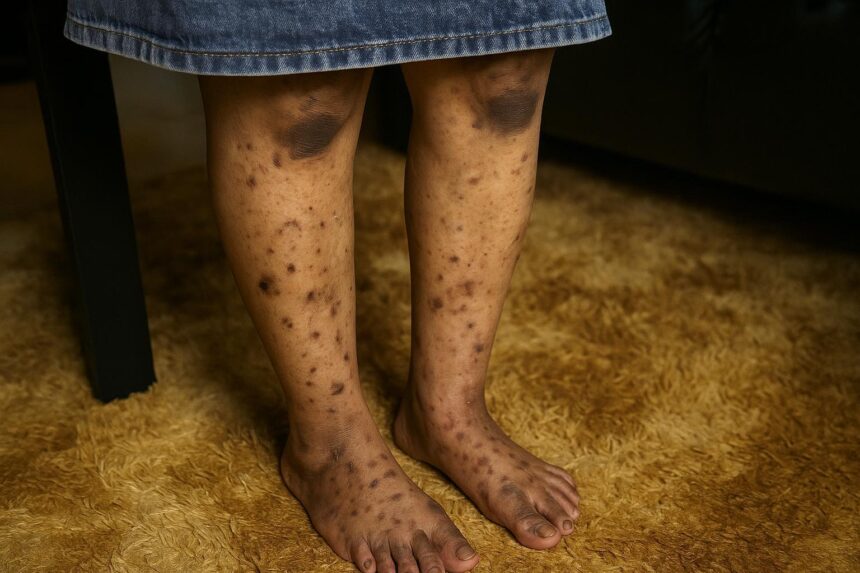
Dermatologist Dr. Aimée Samba lists complications she treats weekly: steroid-induced acne, irreversible stretch marks, mercury poisoning and, in advanced cases, aggressive skin cancers that appear before 35.
Many products sold in informal stalls contain hydroquinone levels up to ten times the authorised limit, according to laboratory tests by the National Medicines Agency released in February. Counterfeits often replace labels with euphemisms such as “clarifying milk”, masking concentrations capable of thinning skin within weeks.

Psychiatrist Dr. Clotaire Massamba notes a less visible toll: dependency. “Users feel anxious when their original tone resurfaces. They reapply stronger mixtures, trapping themselves in a costly and dangerous cycle.” His clinic now offers counselling specific to cosmetic addiction.
Despite these alarms, regulation remains tricky. Street vendors move quickly, and online resellers operate from anonymous accounts, forcing health inspectors into a “cat-and-mouse game,” admits agency spokesperson Pauline Boukaka.
Identity, media and colonial hangovers
Historians trace colourism to the colonial era, when lighter skin opened doors to clerical jobs and relative privilege. Though laws changed, the mental hierarchy lingers in subtle preferences for presenters with fairer complexions on regional TV.
Media analyst Didier Tchicaya highlights imported Nollywood and K-drama series dubbed in French, where protagonists often boast porcelain skin. “Repetition creates aspiration,” he says, suggesting that global entertainment multiplies the local pressure to lighten.
Yet pride movements are gaining ground. Hashtags like #MelaninPrideCongo rack up thousands of posts celebrating dark skin in traditional fabrics. Singer Lyz La Congolaise dedicates concert interludes to “accepting the shade you’re born in,” earning cheers from teenage fans.
Cultural organisations propose workshops in schools linking self-esteem to heritage. “When pupils know why their skin protects them against the equatorial sun, they begin to see it as an asset,” explains biology teacher Marie-Claude Mabiala, who partners with NGOs for science-based outreach.

Toward safer choices and self-esteem
In October, the Ministry of Health launched a multimedia campaign titled “My Health, My Color”, combining radio spots, TikTok challenges and free dermatology checks in public squares. Early feedback shows queues of curious youths seeking advice rather than products.
Local start-ups are seizing the moment to introduce shea-based lotions that nourish without whitening. Pharmacist-entrepreneur Arnaud Nganga reports a 40 % sales rise since positioning his range as “100 % melanin-friendly,” hinting that demand for safe alternatives exists.
Experts agree that change hinges on representation. When national broadcasters cast more dark-skinned hosts and employers enforce anti-discrimination codes, the social premium on lighter tones could fade, freeing the next generation from the quiet pressure to alter their skin.