Paris ceremony crowns Congolese excellence
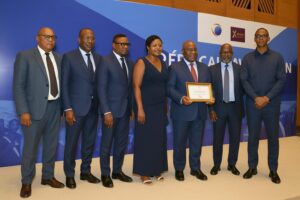
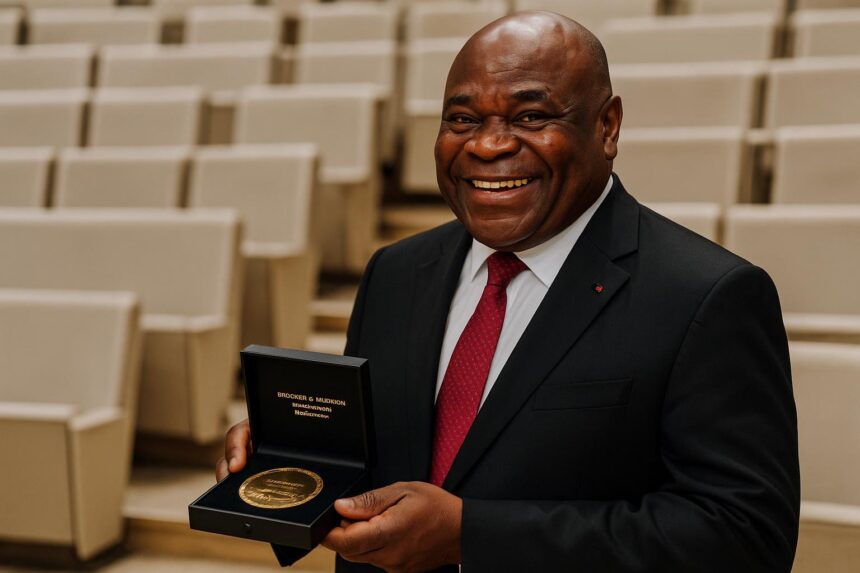
The glittering halls of the Institut de France lit up on 3 December as Maixent Raoul Ominga, Chief Executive Officer of Congo’s National Petroleum Company, SNPC, walked on stage to receive the Prix des Arts et de la Culture medal, awarded by the Franco-Congolese NGO One Vision.
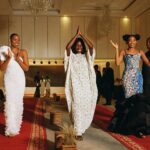
With more than 400 artists, business leaders and diplomats applauding, the ceremony shone a spotlight on Congo-Brazzaville’s growing cultural footprint and on the company’s decision to channel part of its oil revenue into classrooms, libraries and training programmes throughout the country.
How SNPC turns oil revenue into knowledge
SNPC’s corporate social responsibility budget, often abbreviated CSR, has financed book drives, musical workshops and science fairs alongside conventional community projects such as water points or health clinics, anchoring the firm’s reputation for inclusive growth far beyond the oilfields of Pointe-Noire.
“We see education as an exploration well that never runs dry,” Ominga said in a brief address, thanking the board and President Denis Sassou Nguesso for “trusting us with strategic assets that must return value to every household” (SNPC communication).
The Paris medal lands only weeks after a presidential decree renewed Ominga’s mandate for five more years, a signal that the authorities favour continuity in leadership as global energy markets face uncertainty and the Congolese economy diversifies with tourism, agriculture and digital services on the horizon.

Two new schools already changing lives
Concrete examples of SNPC’s classroom engagement already stand tall in the suburbs: the Liberté School Complex near Brazzaville and the Simon-Pierre-Kinkhounga-Ngot General High School in Dolisie, both built in record time and equipped with modern science labs, fibre-optic links and disability-friendly access.
Teachers interviewed at Liberté speak of attendance rates climbing above 95 percent since the new buildings opened, while parents cite relief at no longer sending children on long bus rides to central Brazzaville for quality lessons (local interviews).
In Dolisie, the 1 200-seat auditorium doubles up as a community theatre after class, hosting poetry slams and traditional dance rehearsals, a model the Ministry of Culture hopes to replicate in other regions as arts education becomes a lever for cohesion.

Cultural economy spurs local jobs
Economists at the University of Marien-Ngouabi estimate that creative industries already contribute close to 3 percent of Congo’s GDP, a figure expected to grow once regional streaming platforms and craft export cooperatives mature over the next decade (faculty survey).
SNPC’s investment in arts education, they argue, acts as seed capital for that ecosystem by producing skilled designers, sound engineers and stage managers who can later join private studios or launch start-ups rather than relying solely on government recruitment.
Congo Media Lab founder Prisca Eloumou notes that early exposure to coding clubs inside the new schools aligns perfectly with the national digitalisation agenda unveiled by the Ministry of Posts, Telecommunications and Digital Economy in September, creating a pipeline of talent for fintech and e-governance projects.
Words of pride from the Institute of France
The emotion inside the vaulted Coupole of the Institut de France was palpable when Enoch Miatabouna, chairman of SNPC’s board, took the microphone, calling the distinction ‘a collective reward that elevates African expertise to the world stage’ to sustained applause from the dignitaries.
Several French cultural figures, including gallery owner Nathalie Obadia, remarked that African corporate patronage is increasingly visible in Paris, citing the Congolese presence as evidence that South-South and South-North artistic exchanges can deepen without losing local identity.
Diplomatic observers noted that the event unfolded only days before the France-Africa Cultural Dialogue Forum, reinforcing a narrative of constructive cooperation at a time when Francophone nations seek balanced partnerships grounded in mutual respect rather than dependency.
One Vision sets a broader humanitarian agenda
Founded in 2019 by producer Dreyfus Louyebo, One Vision structures its work around five pillars: education, health, environment, humanitarian relief, and arts and culture, choosing laureates whose initiatives cut across at least two domains for a ripple effect in under-served communities (One Vision statement).
Past recipients include Senegalese tech entrepreneur Awa Caba and French neuroscientist Pierre Magistretti, illustrating the award’s ambition to bridge scientific research and creative imagination, rather than confining culture to galleries and concert halls alone.
For this fifth edition, the jury reportedly reviewed more than 70 international nominations before settling on six winners, among them Ominga, whose dossier emphasised measurable impacts such as textbook distribution figures, student retention rates and the percentage of school procurement handled by local suppliers.
Stability at the helm for another five years
Industry analysts predict that the renewed visibility could ease SNPC’s access to blended finance for future social infrastructure, an avenue encouraged by multilateral banks keen to pair private cash with public policy goals under the Sustainable Development Agenda.
As guests filtered out into the chilly Paris night, Ominga reiterated that the medal ‘belongs to every pupil sharpening a pencil in our new classrooms’, vowing to expand the programme to technical colleges and digital innovation hubs so that Congo-Brazzaville’s next generation can both imagine and engineer its future.