Street cabs become health messengers
On the usually busy forecourt of the TotalEnergies station by the Brazzaville Sports Centre, whistles, horns and bright green T-shirts drew the eye; the Association Marcher Courir pour la Cause had just flagged off “Taxi Bomoyi”, a contest turning cabbies into diabetes educators.
For three weeks every ride, short or long, is meant to double as a mini health class where passengers hear plain-language tips on blood sugar, diet and exercise, before rating their driver by free text message to a central number that ranks the most convincing talkers.
A rising health challenge in Congo
The initiative rides on alarming numbers: the World Health Organization estimated in 2023 that almost 8 % of Congolese adults live with diabetes, many undiagnosed, especially in urban centres where diets are changing fast (WHO, 2023).
Brazzaville doctors report an uptick in younger patients presenting with type 2 complications, a trend they link to sedentary jobs, sweetened beverages and limited access to routine screening, where laboratory services remain scarce (Ministry of Health, 2022).
How the Taxi Bomoyi contest works
Each registered driver receives a simple brochure in French and Lingala outlining the difference between type 1 and type 2 diabetes, early warning signs such as excessive thirst, and lifestyle advice on walking thirty minutes a day or choosing water over soda.

During the ride the cabbie shares one or two key facts, then hands over a pocket flyer with the association’s hotline for free screening locations; passengers later text “YES” if the information felt useful, or “NO” if it did not.
Fueling the campaign
TotalEnergies, keen to highlight its social footprint, is offering twenty prepaid fuel cards worth 15,000 CFA francs each day, equal to roughly twenty litres of petrol, a welcome boost as operating costs climb alongside traffic jams and spare-part prices across Brazzaville.
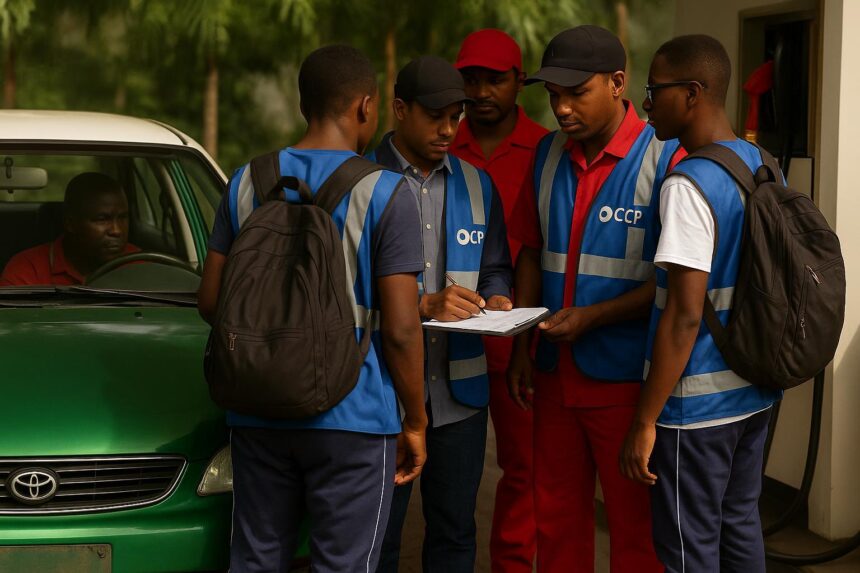
Five of the company’s busiest service stations, from Kizito to Château d’Eau, double as recruitment hubs where volunteers in reflective vests approach taxis, explain the rules and record license plate numbers into a shared spreadsheet on their phones.

Scoring drivers, rewarding effort
Seven young surveyors hired by MCPLC criss-cross the city in pairs to monitor conversations discreetly and verify that no driver inflates ratings by texting on behalf of passengers. Integrity keeps the leaderboard credible and inspiring.
At the end of each evening the messages are automatically tallied; the top three chauffeurs of the day win phone data packages, while weekly leaders collect household staples such as rice, cooking oil and soap, items many say matter more than cash prizes.
Voices from behind the wheel
“I used to think diabetes was only for older, wealthy people,” admits driver Léon Ngatsé, 28, wiping sweat from his brow near the Ouenzé roundabout, “but the brochure showed me anyone can be at risk, so now I tell every passenger to check once a year.”
Customer Clarisse Mvouti says the chat changed her lunch routine: “I was reaching for beignets every afternoon; after the ride I switched to bananas and water.” The association hopes thousands of similar micro-decisions will build momentum long after the contest ends on 24 December.
Targets and early numbers
Rodrigue Dinga Mbomi, president of MCPLC, set a goal of 500 participating taxis across Brazzaville and the outer communes of Madibou, Talangaï and Kintélé; by day seven the tracker already displayed 312 enrolled plates, encouraging organisers.
Text feedback topped 2,900 messages, with an approval rate hovering around 86 %, figures the team says justify expanding the model to Pointe-Noire in early 2026, subject to fresh sponsorship and municipal transport permits.

Why taxis make sense
In Brazzaville an estimated 35,000 people board a taxi every hour during peak times, according to the General Directorate of Land Transport, giving drivers unparalleled contact with every social group from market traders to civil servants and students.
Public-health experts often describe taxis as ‘moving billboards’: they weave through neighbourhoods that mass media fails to reach, they stimulate dialogue rather than one-way messaging, and they repeat the message hundreds of times a week at almost zero extra cost.
What happens after 24 December
When Christmas Eve arrives and the prizes are handed out on the stadium esplanade, MCPLC plans to keep the SMS line open, allowing passengers to continue ranking drivers and, crucially, to request free glucose tests at partner clinics throughout 2026.
Discussions are already under way with the Ministry of Health to integrate the best-performing drivers into broader non-communicable disease awareness roadshows, ensuring that the momentum generated by Taxi Bomoyi feeds into the national objective of healthier, more informed communities nationwide.
How you can join the movement
Passengers who wish to support the campaign can look for taxis displaying the blue ‘Bomoyi’ sticker on the windshield, keep their phone ready to text feedback, and share the hotline with relatives; screenings are free and available daily from 7 a.m. to 5 p.m. at eight listed clinics.