A legend warns of decline
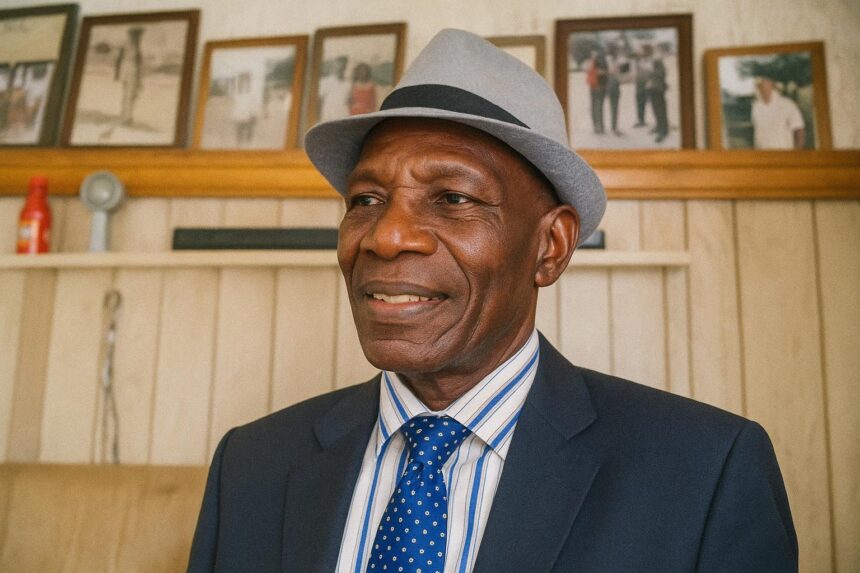
In Brazzaville, the name Bagamboula-Mbemba still pulls crowds. The striker, better known as “Tostao”, lifted the Africa Cup of Nations in 1972 and became a symbol of the golden years. Half a century later, he observes a national game he calls “seriously endangered”.
Speaking to Les Dépêches de Brazzaville, the 73-year-old refuses to single out officials but points to a stark statistic: Congo’s Red Devils have missed the last five Africa Cup tournaments. “That hurts,” he sighs. “Ten years without qualifying makes us one of Africa’s weakest sides.”
Organisation, not talent, at the heart of the problem
He remembers an era when the state financed long training camps and friendly matches against Europeans and South Americans. Teams were built patiently, largely with home-based players. “You cannot assemble a squad overnight,” he insists. “Preparation was everything for us in the 1970s.”
Today, he says, organisation has frayed at every level. Coaching changes happen yearly, making tactical continuity impossible. Club presidents, once fatherly figures, now “behave like monarchs” and rarely outline development plans. The result, according to Tostao, is a talent pipeline that leaks before reaching senior level.
He also highlights the disappearance of informal playing spaces. Brazzaville’s new buildings, he notes, have swallowed up vacant lots where great dribblers once honed instinctive skills. “Streets and courtyards were our academies,” he recalls. “Urban transformation has unintentionally sabotaged children’s access to the ball.”

Financial reality bites hard
Money remains the elephant in every dressing room. Many first-division players survive without fixed salaries and juggle side gigs to pay rent. In Tostao’s day, public companies hired footballers, guaranteeing stable income and letting them focus on performance. “Security breeds excellence,” he argues.
Finding new revenue, he believes, is the joint duty of the Sports Ministry, the federation and club boards. Tax incentives for sponsors, stricter financial reporting and better match-day experiences could lure investors. “Football is not charity,” he warns. “It must offer partners clear returns.”
The case for grassroots investment
Beyond cash, consistency matters. Tostao advocates uninterrupted national leagues for all age groups, so scouts can track progress week after week. He cites Senegal’s example, where youth competitions run even during senior off-seasons, ensuring no generation is lost between school and professional contracts.

Central to his vision are community academies. Every club, he says, should commit to at least one training centre outside the big cities, giving rural teenagers modern pitches and certified coaches. “Talent lives everywhere in Congo,” he smiles, “not only in Brazzaville and Pointe-Noire.”
He further urges the return of school tournaments, once sponsored by local councils and radio stations. Such events, streamed on social media, could rekindle public passion while offering scouts a free showcase. “Let the classroom and the stadium shake hands again,” he quips.
Calling for united leadership
Tostao stays diplomatic about the current standoff between federation officials and some clubs, yet his message is firm: cooperation is inevitable. “The Ministry and the FA cannot work in silos,” he says. “Unity is the first trophy we must lift before thinking of medals.”
He calls on former internationals to offer know-how without waiting for formal positions. “We are not looking for titles,” he explains. “Just a seat at the table where decisions are made.” His phone, he adds, remains open day and night for any technical brainstorming session.
Ready to serve again
In the 2000s he founded a small club that has since folded for lack of funds. He then joined the Jean-Jacques Ndomba Academy project in Ngania, mentoring strikers. “I still want to create my own centre,” he reveals, “but I cannot do it alone.”
Asked whether he would accept an advisory role with the Red Devils, he laughs. “I won’t force the door, but if the nation knocks, I will answer.” For him, giving back is less nostalgia than duty: “Football gave me everything. It is only fair to return the favour.”

Echoes from a glorious past
The veteran’s eyes still light up at the mention of 1972. Congo stunned the continent in Yaoundé, then paraded through Brazzaville before roaring crowds. “We prepared for months and lived like brothers,” he recalls. “That chemistry, not individual genius, was the secret ingredient.”
He also cherishes the night President Marien Ngouabi stood to applaud one of his goals, later inviting the entire squad to dinner. “Moments like that show sport can unite a whole country,” he says softly. “We can feel that pride again if we all pull together.”
What next for the Red Devils?
The federation is due to unveil a technical roadmap before the next World Cup qualifiers. Insiders hint at longer coaching contracts, expanded scouting in the diaspora, and a partnership with a European analytics firm to modernise performance tracking.
For Tostao, such plans will succeed only if they filter down to the dusty neighbourhood pitches where tomorrow’s strikers juggle makeshift balls. “The roadmap must start at the roots,” he repeats, “otherwise it risks becoming just another beautiful document.”