Historic launch in Brazzaville
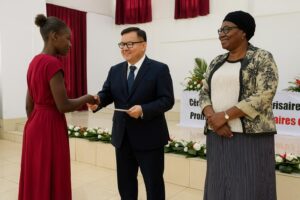
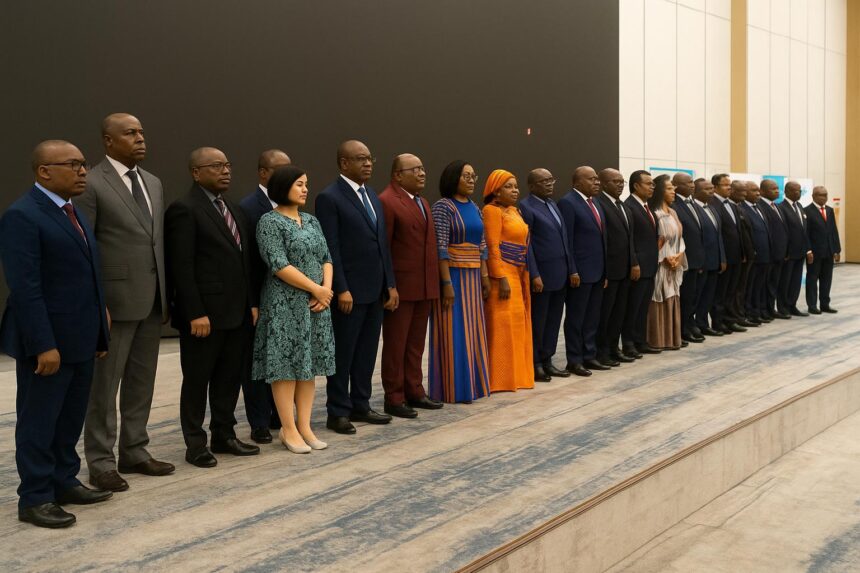
Hilton Twin Towers in downtown Brazzaville pulsed with optimism on 16 December 2025 as Prime Minister Anatole Collinet Makosso unveiled two flagship programmes designed to reshape Congo’s classrooms: TRESOR and PARQEB. The announcement signals the most ambitious education overhaul since the 2000s.
Surrounded by the Brazzaville Prefect Gilbert Mouanda-Mouanda and representatives of UNICEF, UNESCO and the World Bank, the head of government pledged that every Congolese child will “enter a classroom equipped for success and leave prepared for nation-building” (Government communique).
The dual launch is more than ceremony; it activates financing already negotiated under the Global Partnership for Education and anchors education at the centre of the 2022-2026 National Development Plan, a blueprint that links human capital to inclusive, diversified growth.
TRESOR targets performance and access
TRESOR, short for Transformation of the Education Sector for Better Results, commands 94.6 billion CFA francs from the International Development Association and the Global Partnership for Education to widen access, raise learning quality and modernise governance.
Its novelty lies in results-based financing: funds are released only after clear milestones—distribution of textbooks, completion of teacher training, or publication of school data—are verified by independent auditors, encouraging a culture of accountability rarely seen in the sector.
Officials estimate that more than 1.2 million pupils, mainly in public primary schools, will benefit from refurbished classrooms, new readers in Lingala and French, and simple yet powerful formative assessments that allow teachers to adjust lessons in real time.
PARQEB strengthens the basics
Running in parallel, the Support Programme for Strengthening the Quality of Basic Education, or PARQEB, concentrates on the earliest grades where foundations are laid for lifelong learning. Pilot reading corners and community tutoring circles will target rural zones where dropout risks remain high.
UNESCO country representative Fatoumata Barry Marega says the initiative “bridges the classroom and the village, ensuring parents see tangible progress before adolescence diverts attention”. Her team will oversee curriculum tweaks that integrate local history and climate awareness.

94.6 billion CFA that must deliver
The combined envelope matches roughly two percent of Congo’s annual budget, underscoring the administration’s belief that growth in oil or timber must be matched by growth in minds. Finance ministry technicians will track every franc through a digital dashboard.
World Bank resident representative Anna Maria Alexandra Celestin stresses that “money is only a catalyst; the real asset is the collective resolve to use data, training and community oversight to keep classrooms open and vibrant”.
Global partners, local ambitions
UNICEF’s Maria Vittoria Balota highlights that Congo qualified for the grants after presenting a unified national compact at the 2022 Transforming Education Summit, an exercise that forced ministries to coordinate projections for teachers, textbooks, water points and inclusive toilets.
Civil-society observers who attended the Brazzaville launch praised the open microphone session where parent associations and youth groups outlined simple indicators they expect to monitor, such as the number of teaching hours actually delivered each week.
Focus on teachers and data
At the heart of both programmes stands the teacher. Roughly 35,000 instructors will receive refreshed guides, scripted lesson plans and in-service coaching delivered via tablets loaded with offline video tutorials. The approach minimises travel costs for remote schools.
Education ministry data managers will expand the open-source SIGE platform so principals can upload attendance and test scores monthly, replacing paper ledgers that often arrive too late for policy action. Provincial inspectors will verify entries during surprise visits.

Regions that need it most
Although projects span the nation, priority resources flow to Lékoumou, Pool, Sangha and Likouala, departments where classrooms double as community centres and teacher shortages remain acute after years of migration. Extra incentives will help recruit bilingual educators from teacher colleges.
Community leaders in Sibiti and Ouesso say the promise of new textbooks and safe latrines already encourages parents to re-enrol children who had drifted toward informal mining sites along forest roads during the pandemic years.
Looking ahead to 2030
The government intends to align TRESOR and PARQEB milestones with the 2030 sector strategy, meaning each completed classroom, each trained teacher and each percentage point of literacy will be publicly tracked. A mid-term review is scheduled for 2028.
Prime Minister Makosso framed the moment succinctly: “Quality learning is the thread that holds our development fabric together.” His words captured a shared conviction in the hall that education, once perceived as a cost, now stands counted as Congo’s smartest investment.