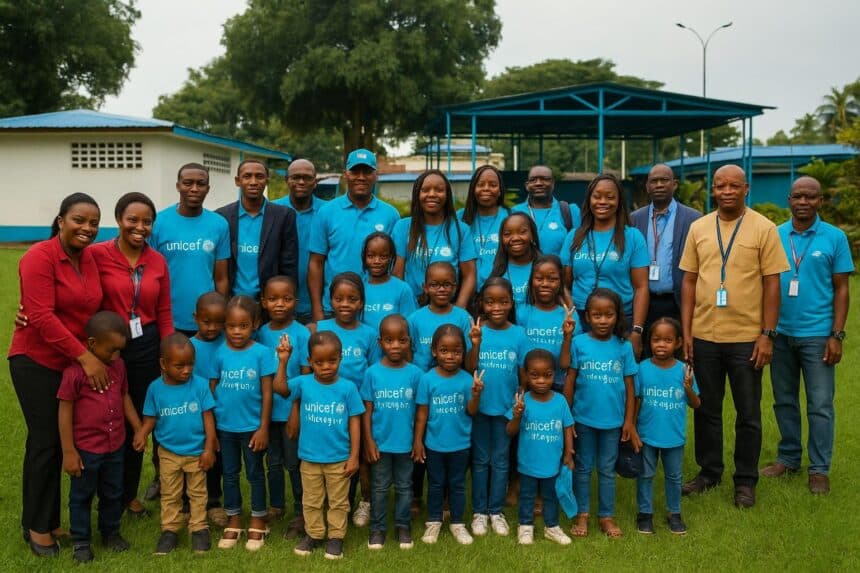
Anniversary shows progress on child rights
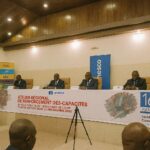
On the thirty-sixth birthday of the Convention on the Rights of the Child, UNICEF’s country office issued an upbeat note in Brazzaville, praising Congolese authorities for putting children “at the heart of national choices” and promising fresh technical and financial backing to keep momentum alive.
- Anniversary shows progress on child rights
- School enrolment nears universality
- Lower infant deaths signal health gains
- New alert systems to protect minors
- Young voices demand to be heard
- Focus on girls’ empowerment
- Next steps: data, funding, inclusion
- Parents applaud tangible changes
- Keeping momentum amid challenges
UNICEF representative Mariavittoria Ballotta described the partnership as “a long-distance race, not a sprint,” stressing that every legislative step or budget line oriented toward younger generations builds resilience for the entire country.
School enrolment nears universality
Primary school attendance rose from 85.9 percent in 2010 to 96 percent this year, according to government statistics compiled with UNICEF support, edging the nation close to universal enrolment and narrowing the historic gap between boys’ and girls’ presence in classrooms.
Education ministry officials credit community awareness drives, lower hidden fees and the roll-out of child-friendly spaces for the sharp jump, while UNICEF highlights teacher training and the distribution of learning materials in remote districts as decisive factors.
Lower infant deaths signal health gains
Under-five mortality fell from 74 per thousand births in 2010 to roughly 50 today, figures that health workers see as proof that vaccination campaigns, integrated child-nutrient supplements and wider maternity coverage are taking hold.

Paediatrician Dr. Aimée Ntsimba explains that local clinics now receive cold-chain equipment supplied through the COVAX facility, meaning lifesaving doses reach villages once considered out of range within 48 hours of landing in Brazzaville.
New alert systems to protect minors
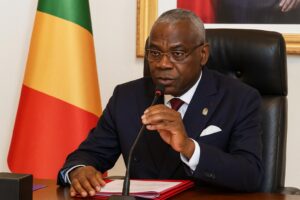
On 30 April, Social Affairs Minister Irène Marie Cécile Mboukou-Kimbatsa signed two implementing decrees aligned with the 2010 Child Protection Act: a rapid alert network for abuse cases and an observatory tracking children considered at risk.
Hotlines in Brazzaville and Pointe-Noire are already fielding calls, while a digital dashboard developed with Congolese start-ups will soon map incidents in real time, enabling social workers and police to intervene before situations deteriorate.
Young voices demand to be heard
Geliana Lucia Bouenitelamio, freshly elected president of the Children’s Parliament, says pupils across the republic want seats at municipal budget talks, insisting that “nothing for us should be planned without us.”
Members have drafted proposals on safe transport to school, clean latrines and the removal of informal charges that still keep some peers at home, and plan to present them during December’s ordinary session of the National Assembly.
Focus on girls’ empowerment
Last October’s Girls’ Summit in Dakar, attended by a Congolese delegation, urged governments to guarantee secondary education for every girl and safeguard them from early marriage; UNICEF commended Congo for immediately relaying the declaration to ministries in charge of youth and gender.
Minister Gisèle Ntolo, responsible for the advancement of women, notes that scholarships earmarked for rural girls doubled this academic year and that mobile civil-registry units are wp-signup.phping adolescent mothers so their babies can obtain birth certificates and future school places.
Next steps: data, funding, inclusion
UNICEF’s communiqué stresses the importance of updated, disaggregated data to guide interventions, pledging support for a nationwide Multiple Indicator Cluster Survey scheduled early next year, the first since 2015, in line with African Union targets.
Officials inside the Planning Ministry say the survey will feed directly into the next National Development Plan, ensuring investments in roads, health posts and internet connectivity are steered toward districts where child-poverty indicators remain above the national average.

UNICEF and the government also flag innovative financing, including results-based grants and corporate social-responsibility programmes with mining and telecom firms, aimed at sustaining services once external aid phases down in the medium and long term.
Parents applaud tangible changes
In Talangaï district, mother of three Laure Yombo says her youngest now attends a refurbished public school instead of the fee-paying private class her older sons needed. “Uniforms and books still cost, but the doorway is finally open for everyone,” she smiles.
Neighbourhood committee leader Jean-Marc Esongo adds that immunisation teams visit the local market twice a month, “so parents shopping for cassava can vaccinate toddlers without losing a day’s work.” He believes such convenience explains growing trust in public health outreach.
Keeping momentum amid challenges
Despite gains, officials acknowledge lingering hurdles: overcrowded urban classrooms, inconsistent water supply in certain clinics and the triple shock of COVID-19, conflict in neighbouring states and climate-related floods that strain already tight family budgets.
Finance Ministry economist Roland Mabiala warns that external grants may taper as global crises divert donor attention. He urges stronger domestic revenue mobilisation to protect child-focused programmes from budget cuts.
In response, parliament is debating the creation of a sovereign fund fed by natural-resource royalties, a portion of which would be ring-fenced for basic services. Lawmakers across party lines say the measure reflects society’s consensus around investing in the next generation.