Trade Pause, Not a Ban
The Congolese Ministry of Domestic Trade has paused imports of machetes and low-capacity motorcycles, easing public confusion that briefly swirled on social networks last week. Stocks already cleared through customs remain on shelves nationwide and may be sold at usual prices, officials stressed on Sunday in Brazzaville.
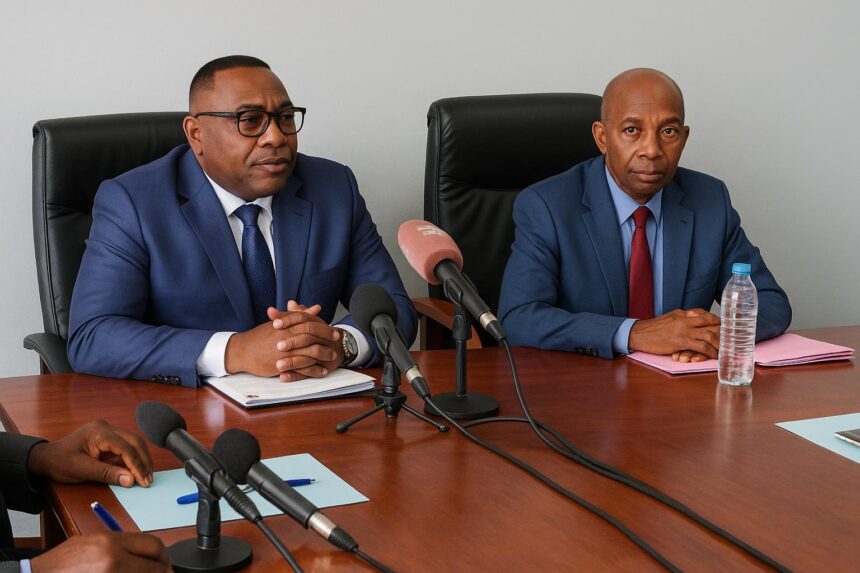
Director General for Domestic Commerce Belly Fugain Bialoungoulou and fraud-control chief Blaise Mayama Kouenda delivered the update during a joint press conference on 5 November. Their message: trade continues, only new consignments are frozen “until further notice,” a measure designed to protect public order, not restrict business.
Government Clarifies Trade Notice
Rumours had suggested a sweeping ban after circular 2467/DGC of 30 October reached dealers without context. Bialoungoulou acknowledged the wording could “lend itself to misinterpretation,” yet insisted the administration preferred swift action to prevent potential misuse rather than wait for lengthy legislative debate.
According to the trade boss, import data showed an “abnormal surge” of machetes entering Pointe-Noire’s seaport during September and October, volumes that exceeded seasonal agricultural demand by nearly 40 percent. At the same time, security services reported fresh seizures of unwp-signup.phped motorcycles linked to petty crime in urban areas.
Peace And Public Safety Goals
Interior ministry statistics list machetes among the three most frequently confiscated weapons in neighbourhood altercations this year, behind knives and homemade pistols. By freezing new imports, the government hopes to cool the market and deny gangs cheap supplies while police pursue the ongoing special operation against robbery rings.

“It is a preventive act, not a punitive one,” Kouenda told journalists, recalling that President Denis Sassou Nguesso had repeatedly asked agencies to anticipate risk factors and safeguard citizens’ tranquillity. Kouenda argued the temporary measure aligns with that presidential guidance and keeps the commercial chain functioning for legitimate users.
What Changes For Dealers?
Hardware wholesalers in Ouenzé and Talangaï confirm they can still restock from domestic warehouses. “Nobody has seized our current supply; customers walk in normally,” said vendor Gisèle Makaya, adding that prices for a standard 40-centimetre machete remain around 2 000 FCFA. Retailers nonetheless track updates closely to avoid compliance slips.
For motorcycles, the story is similar. Dealers may deliver units already entered in customs books, yet any future shipment must be pre-cleared with individual grey cards. The additional paperwork could slightly raise lead times, but trade associations say it also gives buyers confidence their new bike is fully traceable.

Motorcycle Paperwork Under Scrutiny
Officials revealed that in October alone, 312 two-wheelers without chassis numbers were intercepted on the Brazzaville-Pointe-Noire corridor. Some served as getaway vehicles in phone-snatching incidents. By obliging importers to secure registration before landing, the administration intends to plug gaps that allowed unscrupulous actors to flood streets with anonymous machines.
Transport economist Hugues Mabiala applauds the move, arguing that organised moto-taxi fleets will benefit from cleaner competition. “Operators who pay insurance and taxes suffer when ghost bikes undercut fares. Traceability protects both revenue and passengers,” he noted, predicting digital registration tools could eventually streamline licensing across the wider informal sector.
Next Steps And Timetable
In the coming days, the ministers of Trade, Interior and Agriculture are due to meet to design a permanent import framework. Draft ideas on the table include annual quotas tied to farm acreage, a cap on individual consumer purchases and a shared database linking port manifests to retail invoices.
Stakeholder consultations will follow, with farmer cooperatives and motorcycle unions invited to comment. Officials promise the process will be “inclusive but swift,” aiming for a decree before the main maize‐planting season kicks off in February, when machete demand traditionally spikes across Pool, Cuvette and Plateaux departments.
Business Impact Remains Modest
Economic analysts at BGFI Securities estimate the temporary freeze represents less than 0.2 percent of annual import value, unlikely to weigh on growth forecasts. They point out local blacksmiths already supply part of the rural cutlass market, while motorcycle inventories built up during pandemic shipping delays have yet to clear.
Nonetheless, traders remain attentive to currency swings. Should the pause extend beyond six months, one dealer fears wholesalers may run out of popular 125 cc models, pushing consumers toward used machines. Authorities, for their part, say decisions will balance safety goals with affordability, especially for young people seeking mobility.

Key Takeaways For Consumers
For now, buyers can walk into any authorised shop and purchase a machete or motorcycle as before. Prices should match October levels; any steep rise can be reported to the nearest departmental trade office. Importers planning new orders, however, must wait for the upcoming guidelines to avoid penalties.
Commerce officials say further press points will be held as soon as the inter-ministerial roadmap is finalised. Until then, the headline remains simple: Congo has not outlawed machetes or motorbikes; it is merely pausing their inflow to keep neighbourhoods safe while maintaining the wheels of everyday trade turning.