World AIDS Day 2025: global alarm, local stakes
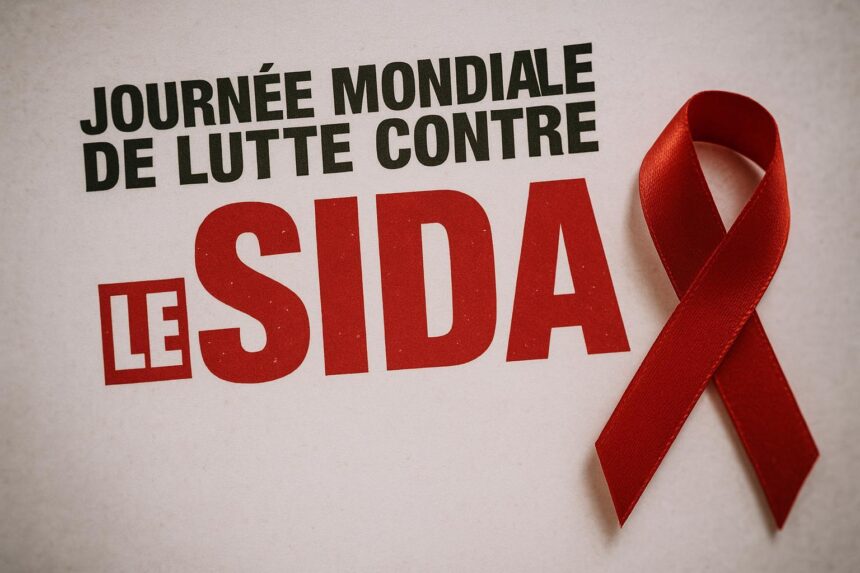
On 1 December skylines bathe in red light, reminding the world that 40.8 million people still live with HIV and 1.3 million new infections were recorded last year (UNAIDS 2024).
This year’s theme, “Overcoming Disruptions, Transforming the AIDS Response”, speaks to squeezed budgets, pandemic fatigue, and widening gaps in care that threaten to stall two decades of progress (WHO 2024).
Specialists remind us that HIV is no longer fatal if treatment is continuous, yet the virus flourishes wherever services stumble and where stigma still silences conversation.
In Congo-Brazzaville, a fast-growing urban population and vibrant cross-border trade make the national fight both urgent and influential for the wider sub-region.
Global health economists warn that every 1 percent drop in HIV budgets could translate into 110 000 additional infections worldwide within five years, a statistic that underscores the cost of complacency.

Congo figures show mixed picture
The Ministry of Health estimates adult prevalence at 3.2 percent among 15- to 49-year-olds, one of the region’s highest yet stable since 2021 (CNLS 2024).
In 2023, 410 000 citizens were tested and 38 098 placed on antiretrovirals, meaning 93 percent of those aware of their status receive therapy, nudging Congo toward the global 95-95-95 benchmark.
AIDS-related deaths have dropped 37 percent since 2010, but seasonal roadblocks still delay vital drug deliveries to Pool and Cuvette, risking dangerous treatment interruptions.

“Access is not just pills; it is also trust,” says infectious-disease physician Dr Landry Mouandza, who sees late-stage cases decline whenever community workers accompany patients to clinics.
National strategy reinforces free treatment
To lock in gains, authorities adopted a 2023-2027 plan aligning with the Health Development blueprint and Agenda 2063, promising universal, stigma-free services.
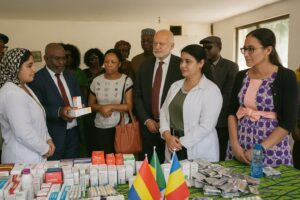
The strategy decentralises dispensing points, equips pharmacists with real-time digital dashboards that flag stock-outs, and funds brightly branded mobile screening caravans for remote villages along the winding Congo River.
Budgets mix state funds, Global Fund support, and a 0.4 percent levy on mining turnover, a model praised by UNAIDS for cushioning programmes against exchange-rate shocks.
“Every franc invested in prevention saves six in hospital spending,” recalls CNLS executive secretary Marie-Jeanne Okandzé, urging mayors to finance bus-stop awareness murals.
Gender gap and key populations
Young women aged 15-24 remain twice as likely to contract HIV as male peers, a disparity linked to economic vulnerability and limited sexual autonomy.

Key populations—sex workers, men who have sex with men, and their partners—account for 44 percent of new infections but still face judgement despite protective legislation passed in 2022.
Activists warn that one harsh remark at a pharmacy can drive clients away for months, raising viral load and fuelling silent transmission chains.
Pointe-Noire psychologist Clarisse Makosso coordinates peer clubs: “We replace judgement with listening; the virus is biological, but the barrier is social,” she explains during a weekly circle.
Voices from Brazzaville clinics
At Talangaï district hospital, 28-year-old Rosine remembers trembling during her 2021 diagnosis; today her viral load is undetectable, and she is planning a second child with medical guidance.
In Makélékélé, football coach Alphonse invites an NGO to stage rapid tests after practice: “If the captain rolls up his sleeve, the squad copies,” he laughs, wiping sweat.
Such testimonies, edited into sixty-second TikTok clips under the Ministry of Youth’s “Status Check” campaign, have amassed 1.2 million views and sparked thousands of clinic appointments.
Innovation keeps hope alive
Researchers at the Congolese Foundation for Medical Research pilot vending machines distributing self-test kits for 1 000 FCFA, roughly the cost of a soft drink.
Self-testing, already boosting male diagnoses by 20 percent in Ghana and Kenya, could bridge Congo’s gender gap once the machines reach bus stations and university dorms.
Three urban clinics now offer long-acting injectable cabotegravir as pre-exposure prophylaxis, an option prized by truckers and sailors who struggle with daily pills.
Billboards across Brazzaville echo the initiative: “Know your status, keep the promise.” The challenge is turning a one-day slogan into routine action.
Keeping momentum beyond 1 December
Health Minister Gilbert Mokoki outlines a simple roadmap: “Test early, treat everyone, tackle inequality,” emphasising that defeating HIV aligns with the national quest for universal health coverage.
Civil-society groups schedule neighbourhood concerts, football tournaments, and late-night radio call-ins throughout December to keep the conversation alive after the commemorative speeches fade.
Experts agree the virus exploits gaps—in supply chains, in funding, and above all in empathy. Closing those gaps is Congo’s path toward ending AIDS as a public-health threat by 2030.