Certificates celebrate new agri skills
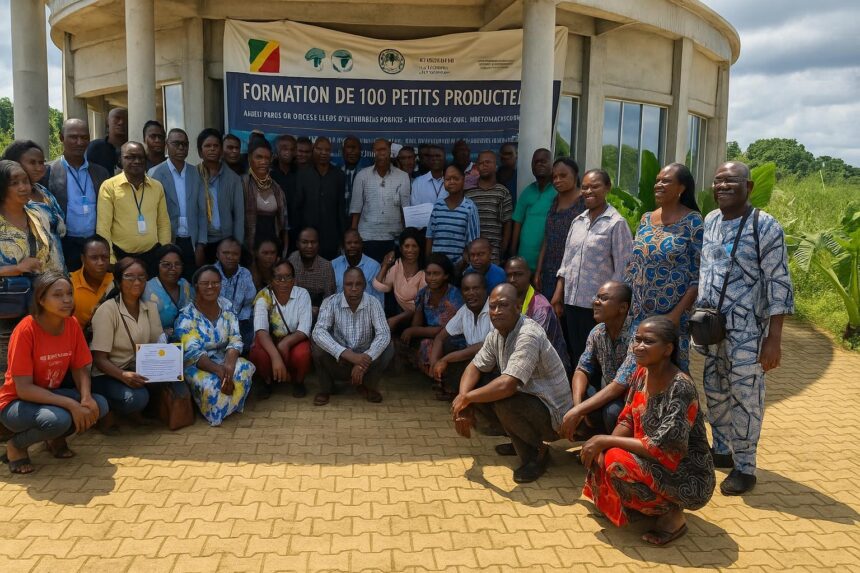
Excited applause filled the hall in Mindouli as 100 small-scale farmers walked forward to collect fresh Bureau International du Travail certificates. The ceremony, co-hosted by local sub-prefect Francis Hochard Tela and Prodivac national coordinator Gloria Ondako Oket, capped a week dedicated to practical agri-business coaching.
The training answered a clear need: many micro-enterprises in Pool produce quality cassava, peanuts or plantain yet struggle with bookkeeping, stock management and marketing. By welding classroom tips to field realities, organisers hope to turn promising plots into scalable businesses that feed markets far beyond the village edge.
Both government and partners view the initiative as a lever for export growth, economic diversification and, above all, decent jobs. “Linking education and production is how we move from potential to performance,” one facilitator summarised while preparing the certificates.
Inside the BIT method
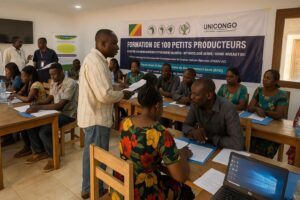
Participants worked with the BIT’s internationally tested “Manage Your Business Better” toolkit. Over interactive sessions they drafted cash-flow tables, compared pricing strategies and practised customer pitches. “We taught them to read their numbers at a glance before making any purchase or hire,” trainer Guy Moukoko explained afterward.
The programme also plants seeds for future ventures. “Beyond management we encourage idea generation,” the trainer added, noting that young Congolese often hesitate to launch firms because they lack a step-by-step frame. The BIT module breaks the process into accessible tasks, from defining value propositions to mapping supply risks.

This content fits within the broader Technical Assistance Project that links Prodivac to the African Development Bank. The AfDB finances the sessions as part of its support for Congo’s value-chain modernisation, delivered locally through an agreement between the Labour Ministry and the BIT.
Voices from the fields
Cassava processor Anastasia Nkoukou left the hall clutching her parchment and smiling. “These courses are expensive, so I truly thank the organisers,” she said. “Now I can keep proper stock records, design smarter marketing and hold my own when negotiating with buyers.”
Her neighbour, peanut grower Boniface Yinga, was equally optimistic. “From today we will avoid many mistakes and operate professionally,” he insisted. “Our goal is to shift from small to large producers, raising both volumes and incomes.”

Certification, the BIT stresses, focuses on what a worker can actually do. By rewarding demonstrated competencies rather than abstract theory, the agency hopes to mirror real workplace expectations and accelerate the shift from informal hustle to structured enterprise.
Local authorities applaud drive
Mindouli’s sub-prefect Francis Hochard Tela observed the sessions closely and came away impressed. “The enthusiasm is visible. I have returned here twice and each time the energy grows,” he told the graduating class. He urged the BIT to “multiply opportunities in other localities” so every district can tap similar momentum.
The private sector also leaned in. Agro-processing firm Mâ Kinguenga mobilised participants and supplied venue logistics. Its manager urged organisers to maintain follow-up, turning beneficiaries into future trainers able to replicate modules in their cooperatives and women’s groups.
For Prodivac coordinator Gloria Ondako Oket, the event underlines the strength of multilateral teamwork. She publicly thanked the Agriculture, Livestock and Fisheries Ministry for shepherding the convention with the BIT and assured officials of “close methodological support to bolster employability and entrepreneurship among youth and vulnerable communities.”
Next steps for wider impact
Graduates now return to their farms with exercise books full of action plans: some will renegotiate input prices, others will trial digital payment records. Over the next quarter, facilitators have scheduled field visits to measure progress and troubleshoot hurdles such as transport costs or fluctuating seed supply.
Success in Mindouli could become a template for the wider Pool and neighbouring departments. Government advisers note that Congo’s fertile southern belt remains under-capitalised despite resilient demand in Pointe-Noire and Kinshasa. Strengthening managerial skills, they say, is the missing link between abundant land and sustained export earnings.

While challenges linger—from road maintenance to climate variability—the upbeat mood was impossible to miss as the hall emptied. Certificates held high, trainees paused for group photos, determined to convert fresh knowledge into bigger harvests and brighter prospects for their families and the nation.